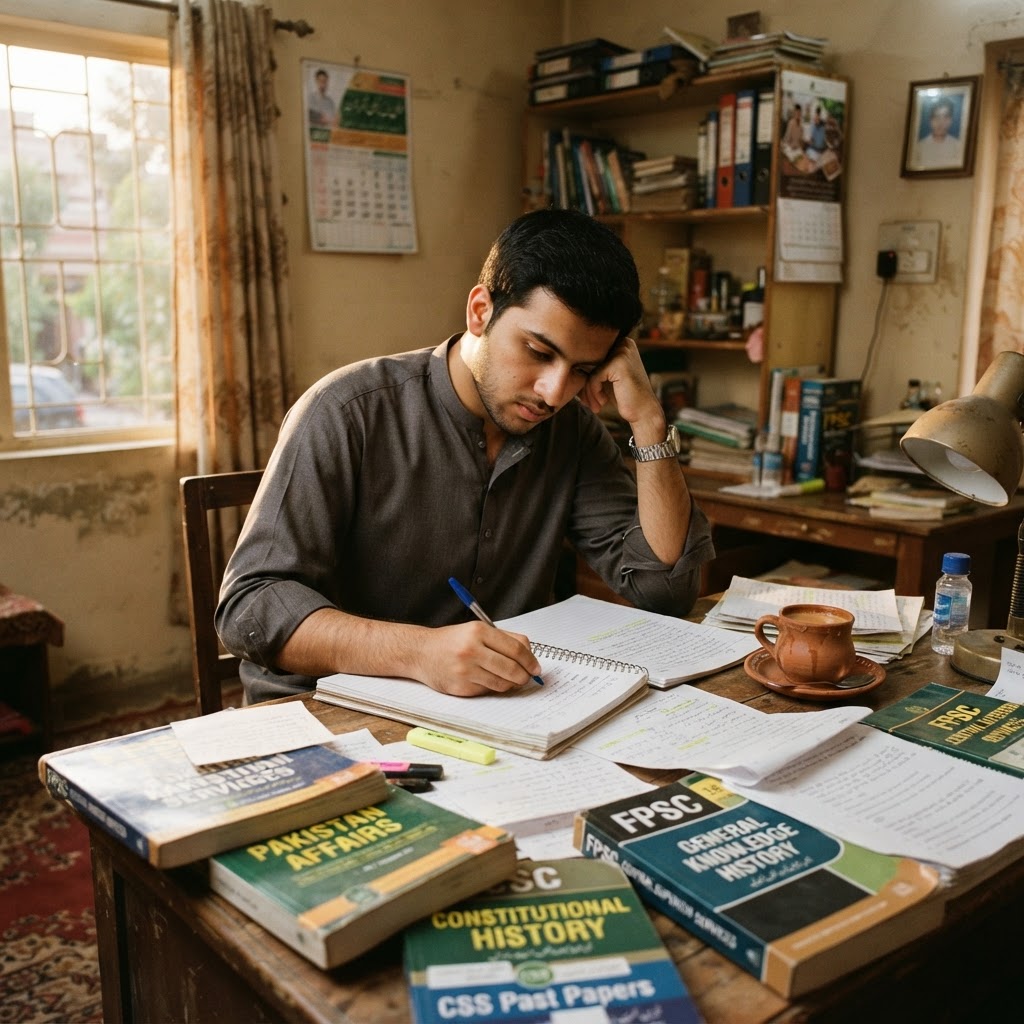
Government jobs in Pakistan carry a prestige and security that private sector roles rarely match. But the path to getting one is long, competitive, and often misunderstood. Here are the five questions every aspirant asks about CSS, PMS, and public sector careers, answered without the coaching academy marketing.
1. Should I Prepare for CSS?
This is the first question, and it deserves a more nuanced answer than most academies give.
CSS (Central Superior Services) is Pakistan's most prestigious competitive exam. Successful candidates join the civil service bureaucracy, taking up roles like Assistant Commissioner, Deputy Superintendent of Police, Foreign Service officer, or Customs officer. The prestige is real, the job security is unmatched, and the career progression is structured.
But CSS is not for everyone. The pass rate is under 2%. Preparing takes 12-18 months of intensive study. The salary, while adequate, is modest compared to what a skilled professional can earn in the private sector or freelancing. The power and perks are attractive, but the work can be bureaucratic and slow.
You should consider CSS if:
- You are genuinely interested in public service and governance
- You value job security and prestige over income
- You have 12-18 months to commit to preparation
- You can handle the pressure of a highly competitive exam
You should not pursue CSS if:
- Your primary motivation is money
- You are not interested in public administration
- You are looking for a quick career path
- You would be devastated by failure after years of effort
The honest answer: CSS is worth preparing for if you want a career in public service, not just a job. The prestige is real, but so is the effort required. Don't pursue it because of family pressure or social status alone.
2. How Long Does Preparation Really Take?
Coaching academies often promise results in 6 months. The reality is different.
Minimum realistic preparation: 12 months of consistent study, 6-8 hours daily. This assumes you already have a strong academic foundation and good English writing skills.
Recommended preparation: 18-24 months. This gives you time to cover all 12 subjects, practice essay writing, take mock exams, and revise thoroughly. Most successful candidates fall into this range.
Extended preparation: 2-3 years. Some candidates start during their bachelor's degree, giving themselves maximum time. This is a valid strategy but requires sustained motivation over a long period.
The CSS exam has six compulsory subjects (English essay, English précis & composition, General Science & Ability, Current Affairs, Pakistan Affairs, Islamic Studies/Ethics) and six optional subjects chosen from a list of groups. Each subject requires deep preparation.
The honest answer: Plan for 12-18 months of serious, daily study. Anyone who tells you it can be done in less is either selling you something or was exceptionally well-prepared already.
3. What Are My Options Beyond CSS?
CSS is the most famous competitive exam, but it is far from the only path to a government career.
PMS (Provincial Management Service): Equivalent to CSS but at the provincial level. Each province conducts its own PMS exam. The syllabus is similar but slightly less extensive. PMS officers serve within their province.
FPSC General Recruitment: The Federal Public Service Commission regularly advertises positions across federal ministries and departments. These range from administrative officers to specialized roles (engineers, doctors, IT professionals). The selection process is competitive but less grueling than CSS.
Provincial Public Service Commissions: Each province has its own commission (PPSC, SPSC, BPSC, KPSC) that recruits for provincial government departments. These are often more accessible than federal jobs.
Public Sector Organizations: Organizations like WAPDA, OGDCL, NBP, PIA, Pakistan Steel, and various development authorities offer government-like jobs with good benefits. They often have their own recruitment processes.
Armed Forces: The Pakistan Army, Navy, and Air Force offer commissioned officer roles through their respective academies. These are competitive but provide a structured career with excellent benefits.
If you are exploring private sector or freelance opportunities alongside government exam preparation, you can browse services and jobs on Masters Pakistan to find work that fits your schedule.
The honest answer: CSS is one path among many. PMS, FPSC general recruitment, provincial commissions, and public sector corporations all offer government careers with varying levels of competition and commitment.
4. What Is the Salary and Lifestyle Like?
This is the question aspirants are afraid to ask, and the answer surprises many.
Starting salary: A newly appointed CSS officer (Grade 17) earns approximately Rs. 80,000-120,000 per month in basic salary, plus allowances (house rent, conveyance, medical). Total compensation including perks can be equivalent to Rs. 150,000-200,000 per month.
Perks and benefits: Government housing (or house rent allowance), official vehicle (for certain positions), medical coverage, pension after retirement, and job security that no private sector role can match.
Career progression: Promotion is time-bound and structured. An officer moves from Grade 17 to Grade 22 over a career, with salary increasing significantly at each level. A Grade 20-22 officer earns Rs. 300,000-500,000+ per month.
Lifestyle: The lifestyle varies enormously by posting. An Assistant Commissioner in a district headquarters has a certain lifestyle. A Foreign Service officer posted abroad has another. The power and social respect are significant, but the work can be demanding and bureaucratic.
The honest answer: Government salaries are modest compared to the private sector, especially in tech and finance. But the perks, security, pension, and prestige compensate. If money is your primary goal, the private sector or freelancing pays more.
5. What If I Fail?
This is the fear nobody talks about, and it is the most important question.
The CSS pass rate is under 2%. For every candidate who succeeds, dozens fail. This is not a reflection of intelligence or worth, it is the nature of a highly competitive exam.
Have a backup plan. Prepare for CSS, but also develop skills that work in the private sector. Many CSS aspirants who didn't clear the exam went on to successful careers in banking, consulting, media, and the development sector.
Don't attempt indefinitely. CSS has an age limit (21-30 years) and an attempt limit (3 attempts). If you don't clear it within your attempts, move on. There are many paths to a meaningful career.
The skills you gain are not wasted. The knowledge, discipline, and analytical skills you develop during CSS preparation are valuable in any career. Essay writing, current affairs knowledge, and the ability to synthesize information are sought after in the private sector.
Consider alternatives. If CSS doesn't work out, PMS, FPSC jobs, provincial commissions, and public sector corporations are all still available. Many candidates who don't clear CSS succeed in these alternatives.
The honest answer: Failing CSS is not the end of your career. The preparation itself builds valuable skills. Have a backup plan, don't attempt indefinitely, and remember that success is not limited to one exam.
The Takeaway
Government jobs in Pakistan offer security, prestige, and a structured career. But they are not the only path to a good life, and they are not easy to get.
If you are drawn to public service and can commit to the preparation, go for it. If your primary motivation is income or you are pursuing it for family approval, think carefully. The best career decision is one made with full understanding of what it entails, not one made on social pressure alone.